
1. AI and Education: Why Traditional Schooling Creates the "Instruction-Follower Trap"
The conference room is silent. Thirty-seven engineers sit motionless, waiting for direction. The CEO poses a simple question: "How should we approach this problem?" Nobody speaks. These are brilliant minds—graduates of premium institutions, fluent in multiple programming languages, capable of executing complex instructions with precision. But when asked to think divergently, to propose, to question, to lead—the room goes dark.
This is the instruction-follower trap, and it's being manufactured in every classroom across India.
Quick Answer: What is Alternative Education in India?
Alternative education in India refers to learning approaches outside traditional schooling systems, including:
- NIOS (National Institute of Open Schooling) - Government-backed flexible education
- Homeschooling - Parent-led education at home
- Waldorf/Montessori - Child-centered developmental approaches
- Unschooling - Self-directed, interest-led learning
- IGCSE/Cambridge as private candidates - International curricula with independent study
These options focus on developing executive function, creativity, and AI-resistant skills rather than rote memorization.
While your child memorizes the periodic table, AI models are solving chemistry problems in milliseconds. While they practice handwriting, language models are drafting legal briefs. While they're being trained to follow instructions with precision, the global economy is increasingly rewarding those who can generate the instructions themselves.
The data is unambiguous: A McKinsey Global Institute report estimates that 30% of work hours could be automated by 2030, with the highest impact on routine cognitive tasks—the very skills our education system optimizes for. [Source: McKinsey automation report] Meanwhile, demand for executive function skills (cognitive flexibility, working memory, inhibitory control) continues to skyrocket alongside the AI boom, according to LinkedIn data. [Source: LinkedIn Skills Index]
Here's the neurological reality: The prefrontal cortex—responsible for executive function, creative problem-solving, and adaptive thinking—develops most robustly between ages 3-12. This is the golden window. Yet traditional schooling during these critical years focuses on compliance, rote memorization, and suppression of natural curiosity. The brain wiring that forms during these years creates lifelong patterns.
2. Alternative Education Options in India: NIOS, IGCSE, Waldorf, Montessori & Unschooling
The alternative education landscape in India has evolved from fringe experiment to viable infrastructure. Here's your complete guide to homeschooling options in India and other non-traditional paths:

Before exploring each option, understand your child's natural learning style with a Mindprint cognitive assessment to match them with the right approach.
NIOS (National Institute of Open Schooling)
- What it is: India's government-backed open schooling system, offering flexibility in subject selection, pace, and examination.
- The reality: NIOS is legally equivalent to CBSE/ICSE for higher education and employment purposes. Students can register directly, choose their subjects, study at their own pace, and appear for exams twice yearly. Over 2.3 million students are currently enrolled. [Source: NIOS official site]
- Ideal for: Families wanting flexibility while maintaining recognition within India's formal system. Children who need extra time, athletes, performers, or those with specific learning differences.
- The catch: You're still operating within an exam-driven framework. The curriculum is predetermined, and assessment remains conventional.
IGCSE/Cambridge/IB as Private Candidates
- What it is: International curricula that allow students to register as private candidates, studying independently and appearing for centralized exams.
- The reality: These systems are globally recognized and often better aligned with higher education abroad. The curricula emphasize critical thinking over memorization. [Source: Cambridge Private Candidates]
- Ideal for: Families planning international higher education, those wanting curriculum rigor without institutional constraints, and children with strong self-direction.
- The catch: Higher costs (₹30,000-80,000 per subject for exams), limited support infrastructure in smaller cities, and potential social pressure from relatives who don't understand "foreign boards."
Waldorf/Steiner Education
- What it is: A developmental philosophy emphasizing arts integration, delayed academics, and holistic growth. Children learn through stories, movement, and hands-on creation before abstract academics.
- The reality: Waldorf schools in India (Bangalore, Hyderabad, Chennai, Delhi) offer a complete alternative paradigm. Academics begin later (reading around age 7), screens are eliminated, and the environment is intentionally analog. The focus is on protecting childhood wonder.
- Ideal for: Families who believe the conventional timeline is developmentally inappropriate, those prioritizing emotional intelligence and creativity, and children who struggle with early academic pressure.
- The catch: Limited Waldorf schools in India, higher fees (₹2-6 lakhs annually), and philosophical commitments that extend to home life (minimal screen time, natural toys, seasonal rhythms).
Montessori (Authentic Implementation)
- What it is: A child-led approach using specially designed materials that allow self-paced mastery. Children choose their work, move freely, and engage in deep concentration cycles.
- The reality: True Montessori is rare in India. Most "Montessori" preschools are branded but don't follow the philosophy beyond age 6. Authentic Montessori environments continue through elementary years with mixed-age classrooms and minimal intervention.
- Ideal for: Children who thrive with autonomy, families who trust intrinsic motivation over external rewards, and those wanting a prepared environment that teaches independence.
- The catch: Finding authentic Montessori beyond primary years is difficult in India. DIY Montessori at home requires significant material investment (₹50,000-2,00,000) and parental training.
Unschooling/Self-Directed Learning
- What it is: The most radical departure. No curriculum, no structured lessons. Learning emerges from the child's interests, questions, and real-world experiences. Parents become facilitators, not instructors.
- The reality: Unschooling in India is growing quietly. Families document learning portfolios, use NIOS for certification when needed, and build communities for socialization. Children might spend months on robotics, then pivot to marine biology, then learn accounting by starting a small business.
- Ideal for: Families with deep trust in child-led learning, those who can provide a resource-rich environment, and children whose natural curiosity is intact.
- The catch: It requires the most parental confidence, social courage, and infrastructure. Extended family will question you relentlessly. There's no roadmap.
3. Why Homeschooling in India is Growing Rapidly: 2025 Trends & Data
Quick Answer: Is Homeschooling Legal in India?
Yes, homeschooling is legal in India. The Right to Education (RTE) Act mandates education for children aged 6-14 but does NOT require attendance at a physical school. Parents can legally educate children at home and register with NIOS for official certification. Over 2.3 million students currently use NIOS across India. [Source: RTE Act details]
Between 2019 and 2024, homeschooling registrations in India grew exponentially, making alternative education one of the fastest-growing educational movements. This surge isn't happening in a vacuum. Three seismic shifts are converging:
The Remote Work Revolution
When work became location-independent, so did schooling. Parents who formerly spent 90 minutes daily in traffic for school drop-offs suddenly had capacity. The rigidity of the school schedule—the 7 AM scramble, the 3 PM pickup—lost its inevitability. Families realized they could design their days around biological rhythms, not institutional convenience.
Environment-Led Learning: The Dopamine Economy
Parents are beginning to understand neuroscience. They're learning about dopamine hijacking from screens, about the importance of boredom for creativity, and about how natural environments regulate nervous systems.
The phrase "environment-led learning" captures a shift in the future of education: Instead of drilling information into children, create an environment so rich that learning is inevitable. A home with a microscope, art supplies, building materials, and books becomes the curriculum. The parent's job isn't to teach—it's to curate.
This is where the Home OS framework becomes critical—designing your physical space to enable autonomous learning and reducing daily friction.
The Burnout Rebellion
Indian parents—especially mothers—are exhausted. The hamster wheel of homework supervision, school events, competitive pressure, and social performance has become untenable. Homeschooling, paradoxically, offers more peace. When learning is integrated into life, it doesn't require separate "homework time." The rebellion is as much about parental sanity as child development.
4. Traditional vs Alternative Education: Complete Comparison
Understanding the fundamental differences between traditional schooling and alternative education in India helps you make an informed decision. Here's the rational breakdown:
| Dimension | Traditional (Industrial Model) | Alternative (AI-Ready Model) |
|---|---|---|
| Core Philosophy | Standardization, compliance, predictable outputs | Individuation, agency, adaptive thinking |
| Schedule | Rigid (8 AM-3 PM), age-based progression | Biologically aligned (respect for ultradian rhythms) |
| Learning Driver | Extrinsic (grades, rank, parental approval) | Intrinsic (curiosity, mastery, purpose) |
| Assessment | High-stakes examinations, comparative ranking | Portfolio-based, mastery demonstration |
| Social Structure | Same-age cohorts, hierarchical | Mixed-age learning, peer mentorship |
| Environment | Institutional (desks, bells, silence enforcement) | Adaptive (movement, choice, varied spaces) |
| Parent Role | Supervisor of homework, enforcer of compliance | Environment curator, co-learner, facilitator |
| Failure Response | Stigmatized, punished, remediated | Expected, analyzed, iterated |
| Executive Function | Minimal (instructions are given) | Central (children plan, execute, reflect) |
| AI-Era Readiness | Trains skills AI can replicate easily | Develops skills AI cannot (creativity, empathy) |
The neurological distinction: Traditional schooling activates the brain's compliance circuits (basal ganglia habit loops). Alternative approaches engage the prefrontal cortex (executive function, metacognition). The first creates efficient executors. The second creates adaptive thinkers.
5. Success Stories: Alternative Education Graduates & Global Proof
The narrative you hear is "alternative education is risky." The data tells a different story about the future of education in India and globally.

The Global Evidence
- Peter Thiel (PayPal founder): Homeschooled, Stanford dropout, built multiple billion-dollar companies.
- Elon Musk (Tesla, SpaceX): Pulled his children from conventional school to create Ad Astra, a project-based learning environment.
- The Sudbury Model: Graduates of democratically governed schools like Sudbury Valley, where free age mixing and self-directed exploration are central, demonstrate high capacities for pursuing higher education and succeeding in varied careers. [Source: Sudbury research]
The Indian Wave
India's alternative education alumni are quieter, but they're everywhere:
- Rohan Chakravarty (Green Humor cartoonist): Unschooled, self-taught, now works with WWF and National Geographic on conservation communication.
- Raghav Hiremath (Advocate): Documented his own NIOS journey, now helps families design custom learning paths.
- The Riverside Learning Centre (Ahmedabad): Graduates consistently gain admission to design schools, liberal arts programs, and tech startups despite non-traditional transcripts.
The pattern: Alternative learners often take longer to "launch" (they're not rushing through checklists), but when they do, they demonstrate unusual resilience, self-direction, and creative problem-solving. They haven't been trained to wait for instructions.
A crucial insight from longitudinal research surveying grown unschoolers: The majority pursued higher education with ease, reporting that their self-motivation and capacity for self-direction gave them a distinct academic advantage, leading to deep career satisfaction. The early "academic delay" translates into long-term psychological advantage.
6. Alternative Education Cost in India: Financial Planning
Before romanticizing alternative education in India, run the numbers. Homeschooling costs vary significantly based on your chosen approach, and understanding the financial reality is critical.
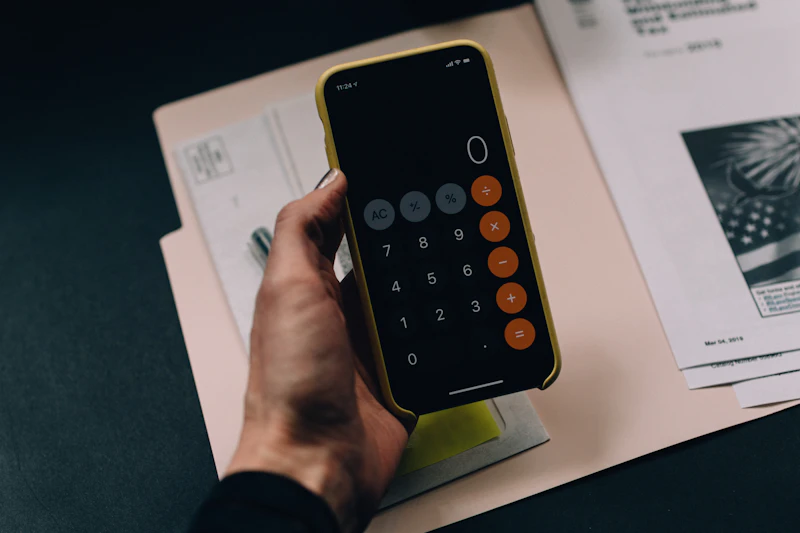
Financial Reality Check
School Savings:
- Average urban private school: ₹1.5-4 lakhs/year
- School supplies, uniforms, transport: ₹50,000-1,00,000/year
- Total saved: ₹2-5 lakhs/year
Alternative Education Costs:
- NIOS registration + exams: ₹3,000-15,000/year
- IGCSE private candidate: ₹30,000-80,000 per subject cycle
- Waldorf/Montessori schools: ₹2-6 lakhs/year
- Homeschooling materials (books, manipulatives, subscriptions): ₹50,000-1,50,000/year
- Co-learning spaces/support networks: ₹20,000-60,000/year
Net analysis: If you're pulling from a conventional school, direct costs often balance out or decrease. The real cost is time—specifically, parental bandwidth.
The Space Requirement: The "Yes Space"
Alternative education thrives in environments designed for autonomy. You need a designated learning area. Minimum viable: A bookshelf, a work table, storage for projects, natural light. Most Indian apartments can carve this out by reclaiming the "formal living room" that nobody uses. The shift is psychological—accepting that your home will look lived-in, not Instagram-ready.
The Support Network: Non-Negotiable
You cannot do this alone. The families who burn out are those who attempt homeschooling in isolation. Build local homeschool groups (Bangalore, Pune, Delhi, Hyderabad have active networks like Swashikshan). Distribute the load with skill-share arrangements. You don't need to teach everything.
7. How to Homeschool Without Burnout: The Daily Flow System
The greatest fear about homeschooling in India is legitimate: "How will I work, manage the home, AND homeschool?"
Answer: You're not homeschooling. You're home-facilitating.
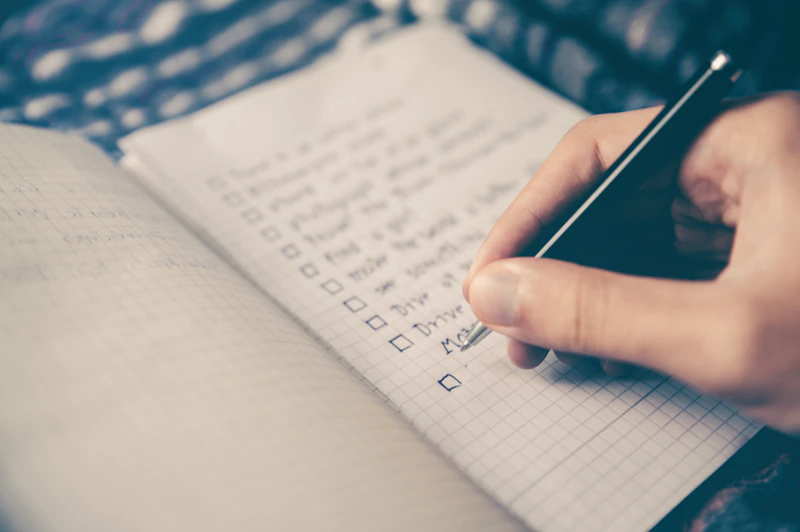
The Daily Flow (Environment Does the Parenting)
The misconception: Homeschooling means sitting at a table for six hours delivering lessons.
The reality: After an initial setup period, a well-designed environment allows children to direct their own days. Your role shrinks to 30-90 minutes of focused facilitation. Children need dedicated time to Explore, Repeat, Deep Focus, and Reflect. The Daily Flow Builder automatically generates the ideal day for children with just a click with Harvard, Stanford, Montessori and AAP recommended activities.
A sample flow (child aged 7-12):
- 7:00-8:30 AM: Morning routine (child-led), free play
- 8:30-9:00 AM: Morning meeting (you facilitate: "What's your plan today?")
- 9:00-11:00 AM: Deep work block (child works independently on chosen projects; you're available but working on your own tasks)
- 11:30-12:30 PM: Skill-building session (this is your teaching hour—math, writing, science)
- 2:00-4:00 PM: Afternoon projects / co-op classes / social time
Your active teaching time: 1-2 hours. The rest is environment design, not instruction delivery.
The Strewing Strategy
"Strewing" means strategically placing provocations in the environment: a new book on the coffee table, a geometry puzzle on the shelf. You're not forcing consumption—you're creating ambient curiosity. The child's brain starts connecting dots without you "teaching."
8. Legal Framework, Socialization & Critical Considerations
What About Socialization in Homeschooling?
Research shows homeschooled children often develop superior social skills compared to traditionally schooled peers because they:
- Interact across multiple age groups (not just same-age peers)
- Experience real-world social contexts (not artificial classroom settings)
- Build deeper, chosen relationships rather than forced proximity friendships
The Socialization Myth
Conventional schooling socializes children primarily with same-age peers in artificial settings (30 kids born within 12 months of each other, sorted by test scores). Throughout human history, children learned in mixed-age groups. Alternative learners often have MORE diverse social networks—across ages, backgrounds, and contexts—leading to better social adaptation.
The design principle: Intentionally create varied social contexts like weekly co-op classes, sports groups, volunteer work, and neighborhood play.
The Diagnostic Mindprint: Know Your Starting Point
Critical: Before diving into alternative education in India, assess your child's current cognitive and emotional state. This isn't about labeling—it's about designing appropriately. Use the Mindprint Assessment to get a comprehensive cognitive profile including executive function, learning style, and processing strengths.
9. Starting Your Journey: Reclaiming the Family Unit
There's a moment—usually around 2 PM on a Tuesday—when it hits you.
You're working from your kitchen table. Your child is on the floor nearby, surrounded by art supplies, building an elaborate contraption. They ask you a question about physics. You take three minutes to explore it together, then return to your work. They continue building.
No traffic. No homework battles. No performance anxiety about the school WhatsApp group. No forcing your child into a developmental timeline designed in 1892 for factory preparation. This is the rebellion.
The choice isn't between structure and chaos. It's between externally imposed structure (school bells, curricula designed by strangers) and thoughtfully designed structure that respects your child's neurology, your family's rhythms, and the reality of modern work.
Your 4-Step Path to Alternative Education
Understand Your Child → Mindprint Assessment
You can't design the right learning environment without knowing your child's cognitive profile and processing style.
Check Your Homeschooling Readiness → Homeschooling Calculator
Once you know WHAT your child needs, determine if you can afford it and how to structure it financially.
Design Your Environment → Home OS Framework
Architect the physical and systemic environment that enables autonomous learning and deep focus.
Execute Daily → Daily Flow Builder
Create the day-to-day rhythm that prevents burnout and enables both parent productivity and child autonomy.
Your First Action (Right Now)
Stop researching. Start assessing.
Alternative education in India isn't about reading more articles. It's about making one decision: Will you understand your child's actual needs, or will you keep guessing?
Resources & Official Links
NIOS Official
National Institute of Open Schooling documentation and registration.
RTE Act India
Ministry of Education Right to Education documentation.
Cambridge International
Information for private candidates and IGCSE registration.
Swashikshan
The Indian Association of Homeschoolers network.
NotInSchool Tools
🧠 Mindprint
Discover your child's natural cognitive processing style in 60 seconds.
📊 Homeschooling Calculator
Audit your financial and logistical readiness for alternative paths.
🏠 Home OS
Step-by-step masterclass to design a "Yes Space" that does the parenting for you.
🌊 Daily Flow Builder
Interactive tool to generate a gentle, biologically-aligned daily rhythm.